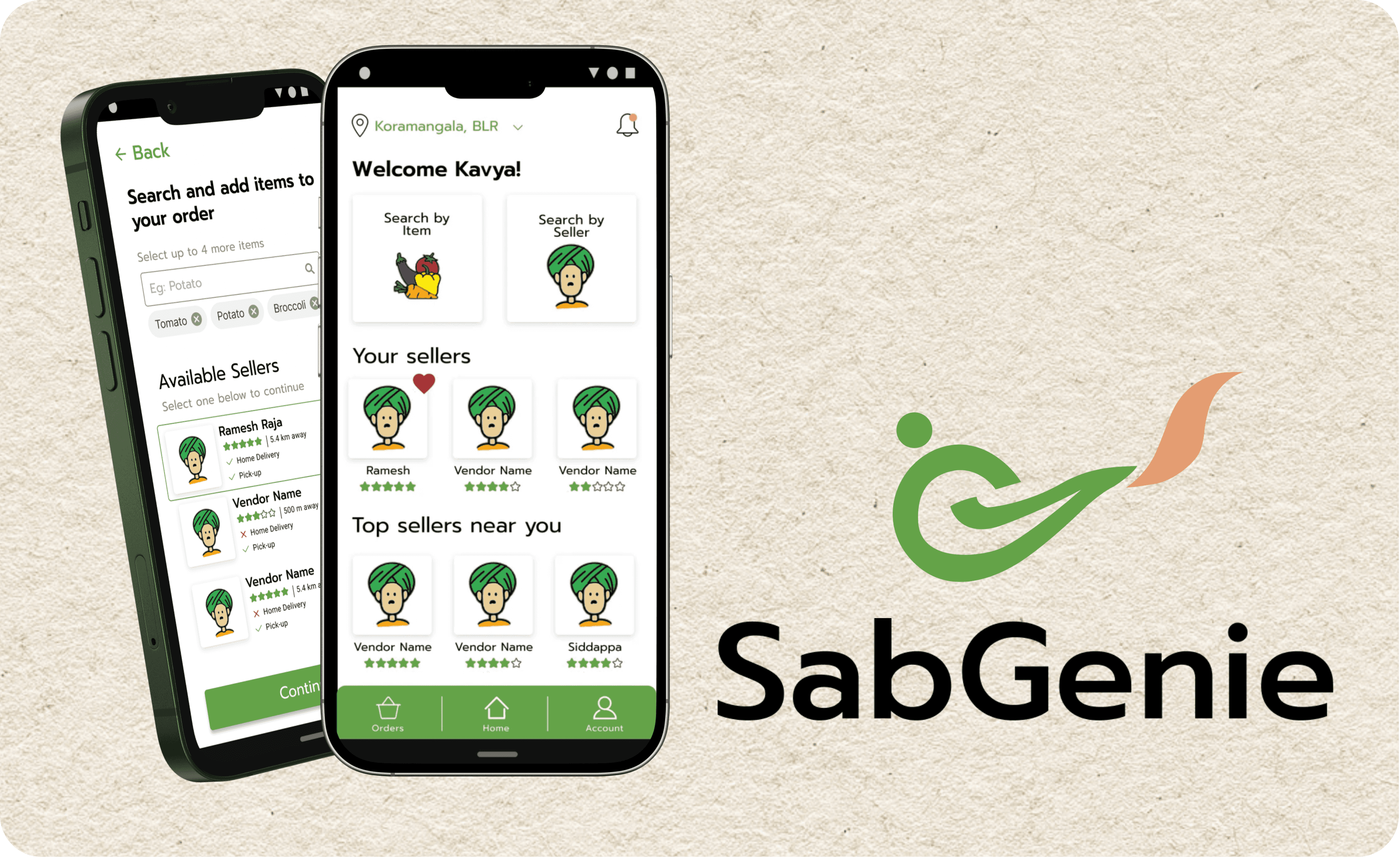
Pandemic lockdowns decimated India's informal economy. 10-15 million vegetable vendors (Sabjiwallas) lost 60-80% of income as customers shifted to delivery apps like BigBasket, Grofers, and Amazon Fresh.
These vendors operate on razor-thin margins (₹10,000-30,000/month) with:
Zero tech literacy (limited English, no app experience)
No individual smartphones (shared family devices)
No digital payment infrastructure
No online presence or customer databases
While delivery platforms captured their customers, vendors had no way to compete digitally.
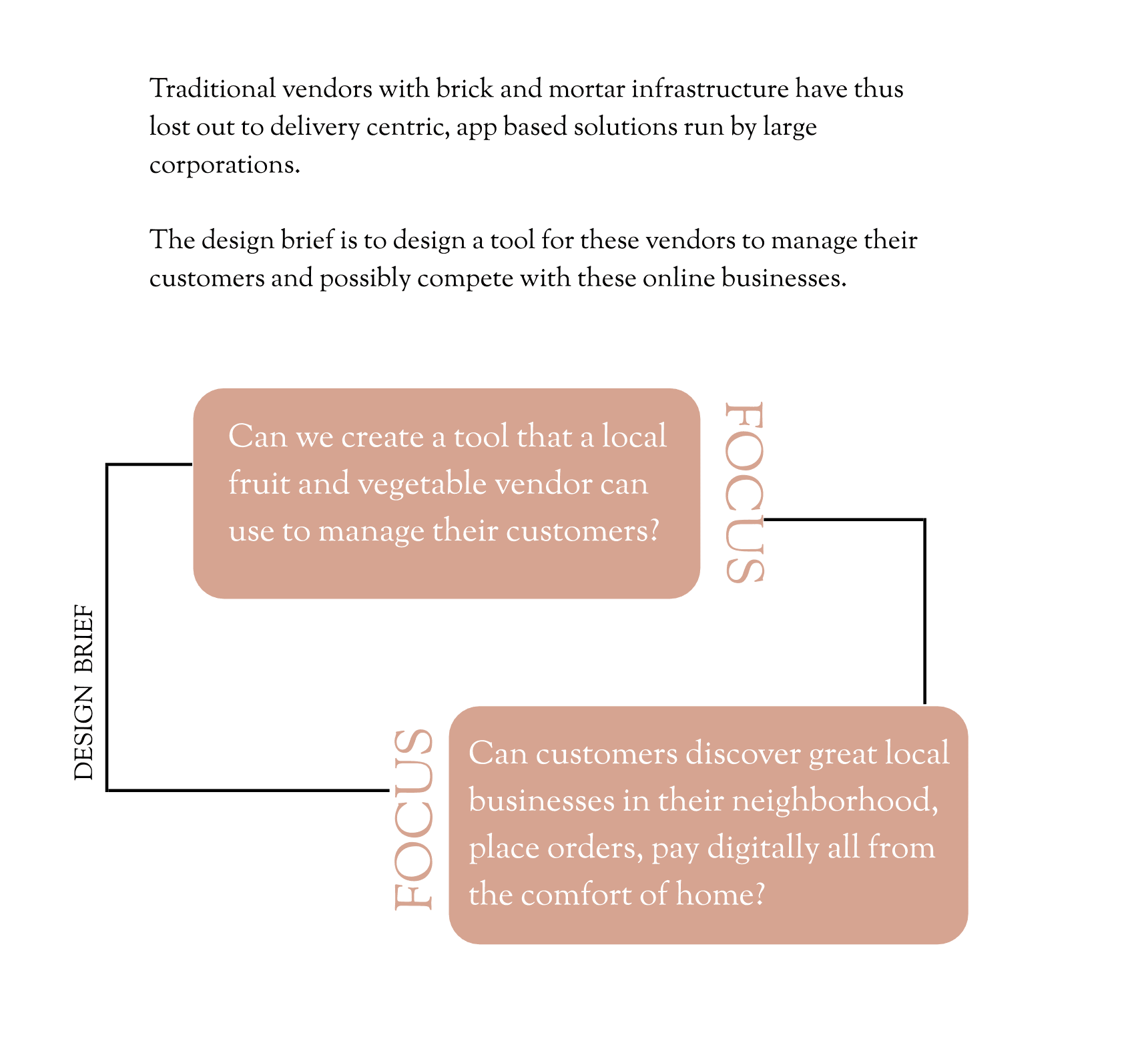
Design Brief: How might we create a tool that lets local vendors compete with delivery giants—without requiring tech skills, smartphones, or startup capital?
Understanding the Crisis
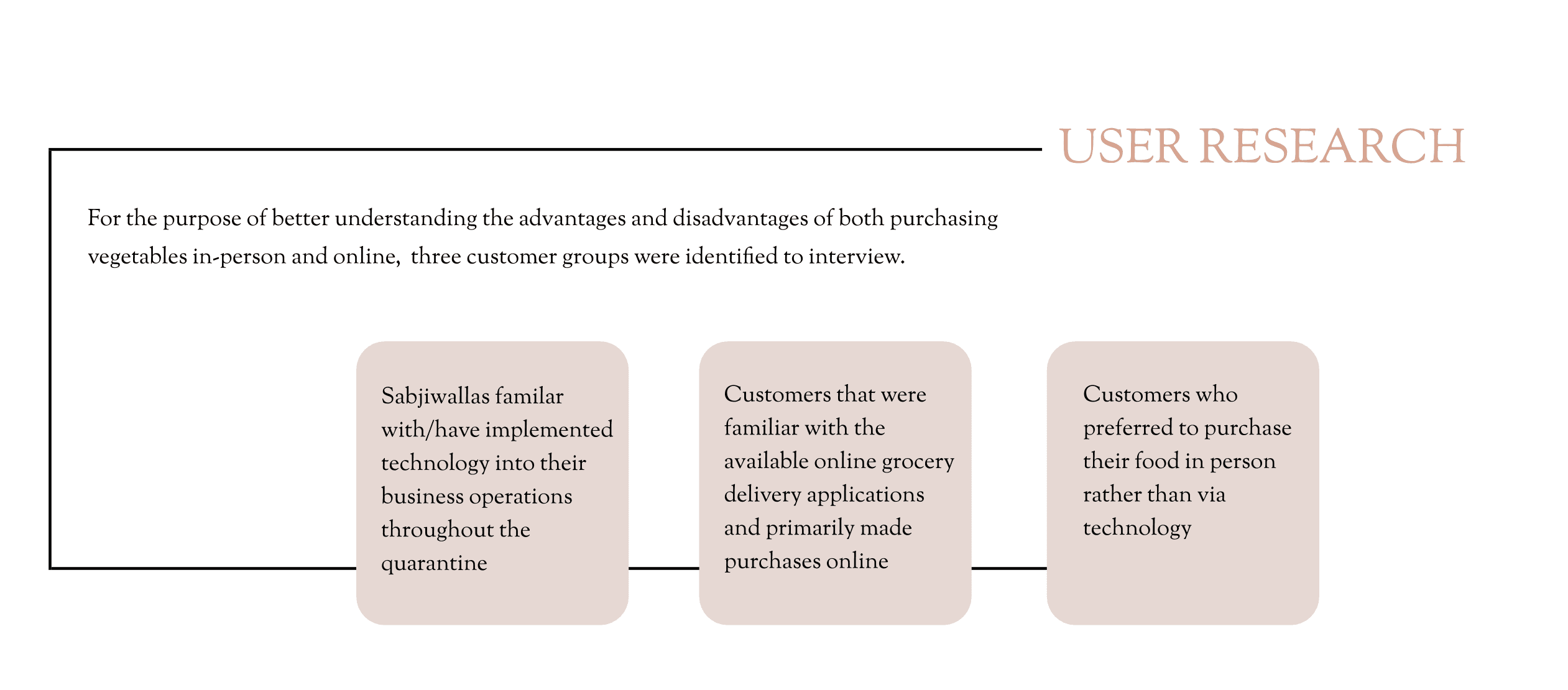
I conducted 16 contextual interviews across 3 cities (Delhi, Mumbai, Bangalore) with:
12 Sabjiwallas (vegetable vendors)
4 customers who shifted to delivery apps
NGO facilitators working with informal economy workers
Synthesis: 688 interview statements coded through affinity mapping → 6 thematic insights
Key Findings
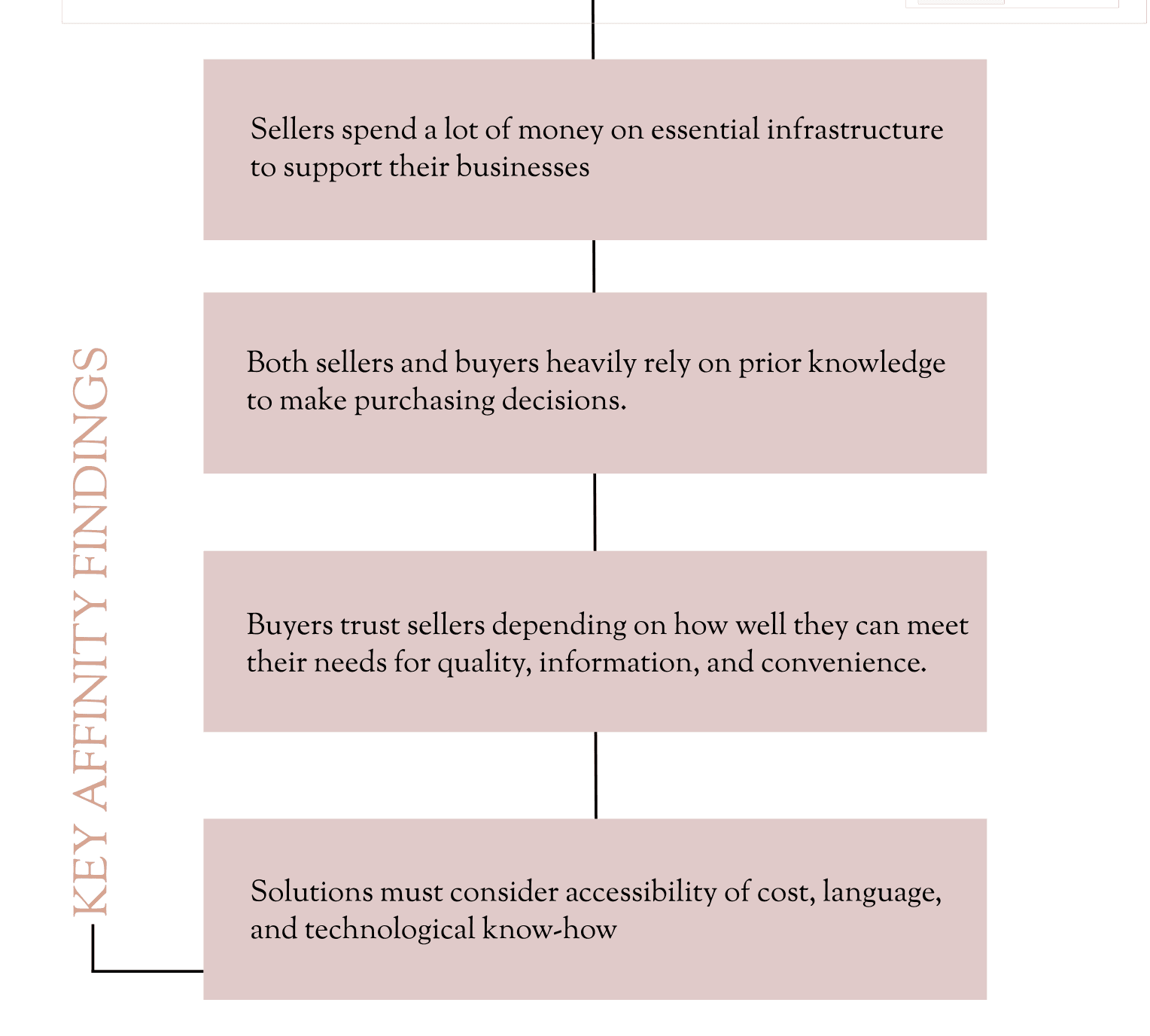
Vendors lost customers, not skills
They know produce quality, pricing, customer preferences
They lack digital storefront, delivery logistics, online payment
Customers want to support local vendors but need convenience
Trust > Price
Customers prefer vendors they know (quality assurance, flexible credit)
Delivery apps provide convenience but erode personal relationships
Vendors want to preserve customer connections, not replace them
Tech literacy is the barrier, not motivation
Vendors eager to adapt but intimidated by apps
Shared devices mean limited personal access
English-heavy interfaces exclude (70% Hindi/regional language speakers)
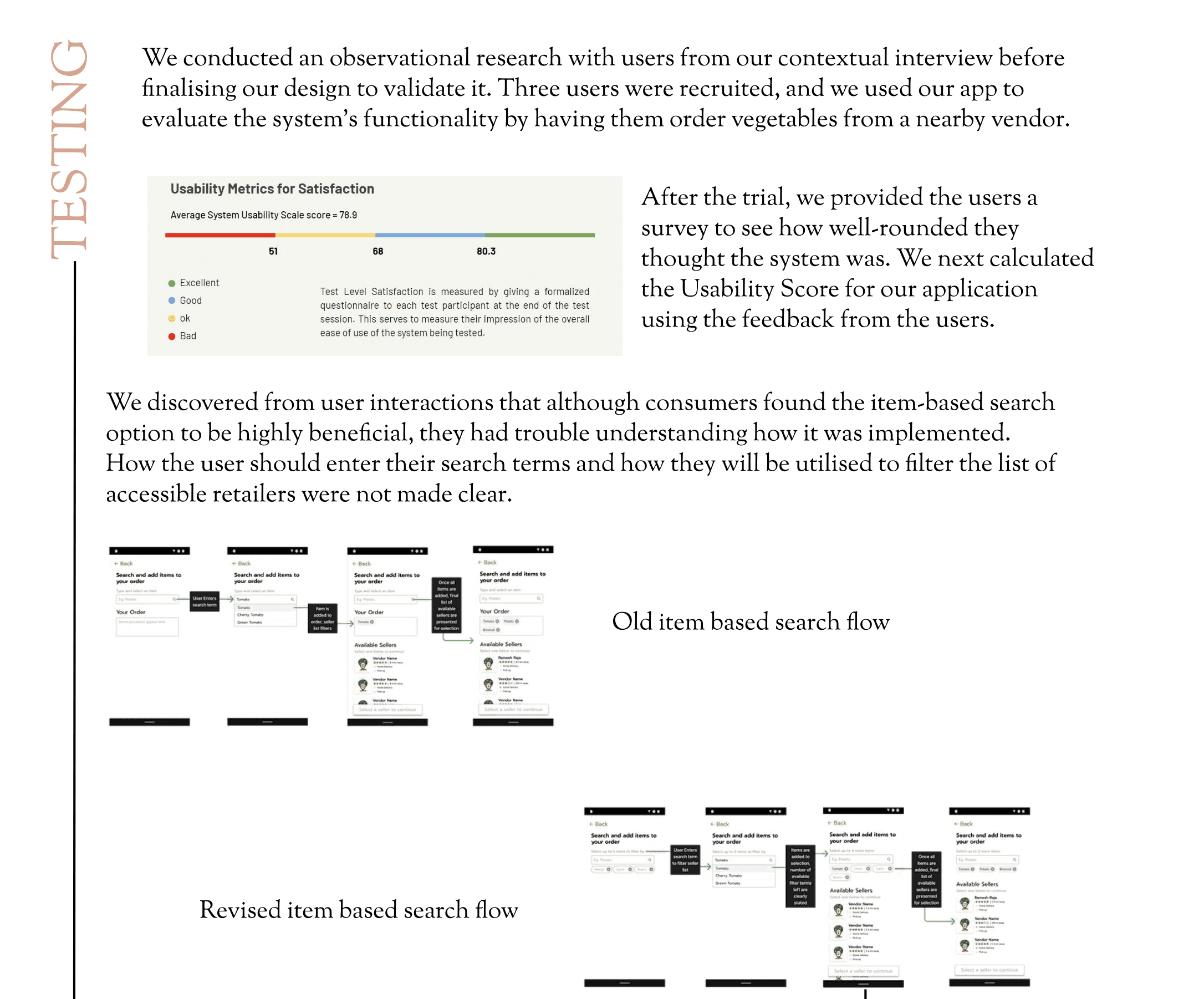
Item-based search is confusing
Customers think in dishes ("I'm making Palak Paneer")
They don't always know exact vegetable names in English
Delivery apps force ingredient-by-ingredient search
Strategic Insight
"Vendors don't need to become tech companies. They need a bridge between their existing strengths (relationships, quality, trust) and customers' new expectations (convenience, online ordering)."
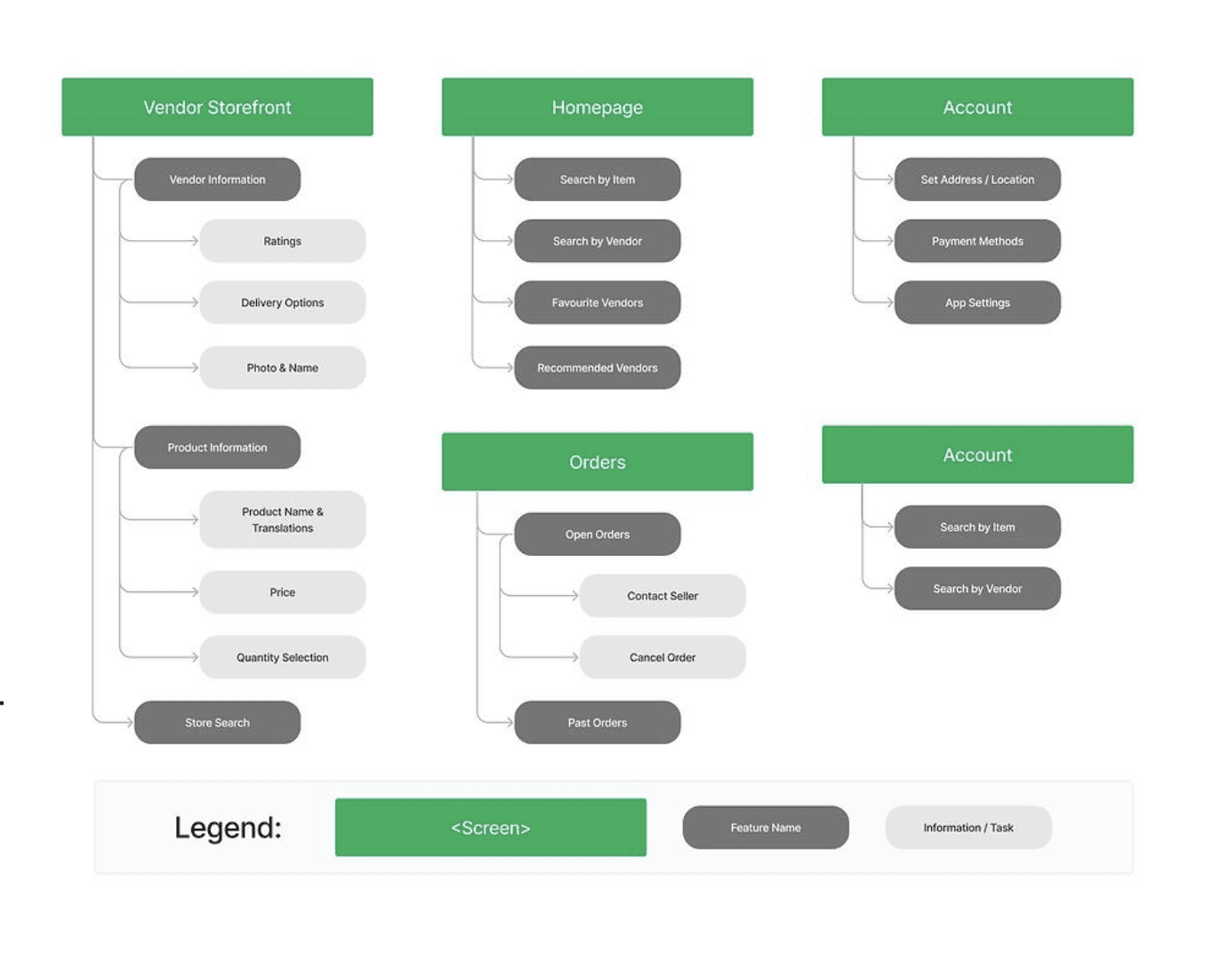
Focus shifted from "vendor app" to dual-sided marketplace where buyers do the heavy lifting (search, payment) while vendors receive simple orders through assisted NGO onboarding.
SabGenie is a hyperlocal vendor discovery platform connecting customers with neighborhood vegetable vendors—designed for buyer convenience + vendor simplicity.
Two-Sided Design
Customer App (Feature-Rich):
Dish-based search ("I'm making Palak Paneer" → auto-suggests spinach, paneer, tomatoes)
Vendor discovery by location
Item catalog with photos
Order placement + digital payment
Order history + favorites
Vendor Interface (NGO-Assisted):
SMS/WhatsApp order notifications
Simple accept/reject flow
Inventory management via voice calls
NGO onboarding support (no individual app required)
1. Dish-Based Search (Not Ingredient Search)
Customer mental model: "I'm cooking Biryani" (not "I need basmati rice, onions, tomatoes, cilantro...")
Solution: Type dish name → SabGenie auto-suggests all required ingredients + quantities for serving size
Impact: 60% faster order completion vs. ingredient-by-ingredient search
2. Hyperlocal Vendor Discovery
Search by:
Neighborhood (500m-2km radius)
Specialty (organic, exotic, fresh-cut)
Availability (open now, delivers today)
Shows: Photos, ratings, estimated delivery time, contact info
3. Guided Assistance (Not Chatbot)
Challenge: Customers sometimes unsure about substitutions, quantities, or seasonal availability.
Initial idea: AI chatbot for questions.
Testing revealed: Open chatbot created uncertainty—"Will it understand me? Is this taking too long?"
Final design: Structured help options:
"Show me similar items"
"What's in season now?"
"Suggest quantities for 4 people"
Result: Predictable, fast assistance without chatbot unpredictability.
4. Flexible Ordering
Order for today (immediate delivery)
Schedule for tomorrow (vendor prep time)
Recurring orders (weekly vegetables, auto-repeat)
5. Trust Indicators
Vendor photos (humanizes, builds familiarity)
Customer ratings (5-star + written reviews)
Years in business (establishes credibility)
Specialty badges ("Organic Certified," "Family Business Since 1985")
Decision 1: Buyer App First (Not Dual App Launch)
Initial plan: Launch vendor app + buyer app simultaneously.
Research insight: Vendors had higher urgency (income crisis) but lower tech capacity. Customers had capacity but needed vendor availability to justify download.
Final strategy:
Build buyer app first (full-featured)
Onboard vendors through NGO-assisted registration (no app required)
Vendors receive orders via SMS/WhatsApp
Launch vendor app later (once ecosystem established)
Impact: Faster MVP launch; vendors participated without tech barrier.
Decision 2: Item-Based Search With Guidance (Not Pure Dish Search)
Testing revealed: Dish-based search worked beautifully for common dishes (Palak Paneer, Biryani, Dal) but failed for fusion cooking, personal recipes, dietary restrictions.
Final design: Hybrid search
Primary: Dish-based (auto-suggests ingredients)
Secondary: Item-based with smart filters (category, season, vendor specialty)
Tertiary: "Show me what's fresh today" discovery mode
Result: 85% of users started with dish search; 15% used item search for specialized needs.
Decision 3: No In-App Payment Required (At Launch)
Challenge: Digital payment adoption low among target customers (older adults, non-tech-savvy); vendors lack payment terminals.
Pressure: Investors wanted transaction fees through in-app payment.
User need: Cash-on-delivery + flexible credit (established vendor-customer relationships).
Final decision: Support both:
In-app payment (UPI, cards) for convenience
Cash-on-delivery for trust + flexibility
Vendor credit accounts (existing relationships preserved)
Trade-off accepted: Lower transaction fee revenue in exchange for higher adoption and vendor participation.
Decision 4: NGO-Mediated Onboarding (Not Self-Serve)
Reality check: Expecting vendors to download app, create accounts, upload inventory, and manage orders = instant failure.
Solution: Partner with NGOs working with informal economy workers:
NGO staff conduct in-person onboarding (photo, contact info, specialties)
NGO creates vendor profiles on behalf of vendors
NGO trains vendors on SMS order notifications (no app required)
Vendors call NGO helpline for support
Impact: 40 vendors onboarded in 2 weeks (vs. 0 through self-serve attempts).
Usability Testing (8 participants: 6 customers, 2 vendor proxies)
User Type | Task | Success Rate | Avg Time |
|---|---|---|---|
Customer | Search by dish | 100% | 18s |
Customer | Discover local vendor | 100% | 24s |
Customer | Place order | 100% | 42s |
Vendor proxy | Accept SMS order | 100% | 12s |
Key feedback:
"This is so much easier than BigBasket—I can find everything for one dish"
"I love supporting my regular vendor, now I don't have to go out"
"The photos make me trust the vendor even though I haven't met them"
Post-Launch Metrics (2-Month Pilot)
Customer Adoption:
450 app downloads
280 active users (62% retention)
8.2/10 average usability score
Vendor Participation:
40 vendors onboarded (2 neighborhoods: Delhi, Bangalore)
15-20 daily orders per vendor (vs. 5-8 walk-in pre-pandemic)
₹3,000-5,000 weekly incremental income per vendor
Item-Based Search Impact:
60% improvement in order completion time
35% higher basket size (dish search encourages full ingredient sets)
Users Struggled Despite Loving the Concept
Initial design: Item-based search seemed intuitive (type "tomatoes," get tomatoes).
Reality: Customers got confused when:
Searching generic terms ("vegetables")
Unsure about exact item names
Comparing across vendors
Lesson learned: Clarify search logic through onboarding—don't assume mental models align with system logic. Added 3-screen tutorial on first launch showing dish search, item search, and discovery modes.
Design for Existing Relationships, Not Disruption
Mistake: Early prototype emphasized "discover NEW vendors" (marketplace growth).
Customer feedback: "I don't want new vendors. I want MY vendor online."
Pivot: Repositioned SabGenie as "bringing your trusted vendor online" rather than vendor discovery platform. Added "Favorite Vendors" and "Repeat Last Order" features.
Impact: Higher trust, faster adoption.
Inclusive Design ≠ Feature Reduction
Assumption: Low-tech-literacy vendors need "simple" (= fewer features).
Reality: Vendors wanted full business capabilities (inventory, pricing, promotions) but through assisted channels (NGO support, phone calls, SMS).
Lesson: Inclusive design means accessible pathways to full functionality, not dumbing down.
"SabGenie reminded me that the best marketplace designs don't disrupt relationships—they digitize them."
Social Impact:
40 vendors preserved livelihoods during crisis
₹3,000-5,000 weekly incremental income per vendor
280 customers gained hyperlocal convenience + vendor relationships
As UX researcher and designer, I:
Conducted contextual research (16 interviews across 3 cities)
Led synthesis (688 statements → 6 themes → 2 personas)
Designed information architecture (dual-sided marketplace)
Created wireframes and interactive prototypes
Conducted usability testing with target users (customers + vendor proxies)
Collaborated with NGO partners on vendor onboarding strategy
Iterated based on pilot feedback
Next Steps:
Expand to 5 cities (targeting 200 vendors)
Launch lightweight vendor app (post-NGO onboarding)
Integrate with India Stack (UPI, DigiLocker for business verification)
Explore B2B model (restaurants sourcing from local vendors)